Why Dimensional Hair Color is the Ultimate Upgrade
Have you ever looked at a photograph of celebrity hair and wondered why it looks so much better than a standard dye job? The secret isn't a magical product; it's dimensional hair color.
Unlike 'flat' or 'solid' color—where one single shade is applied from roots to ends—dimensional color uses a combination of techniques (highlights, lowlights, balayage) to create contrast, depth, and movement. It mimics the natural variation seen in children's hair, catching the light in a way that solid color simply cannot.
If you are ready to move beyond the basic, here are four stunning examples of dimensional color that prove why this technique is the ultimate upgrade.
The Power of Contrast: Highlights
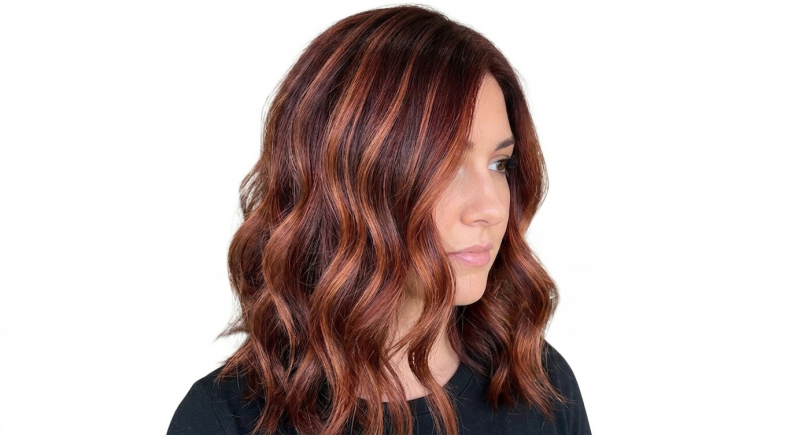
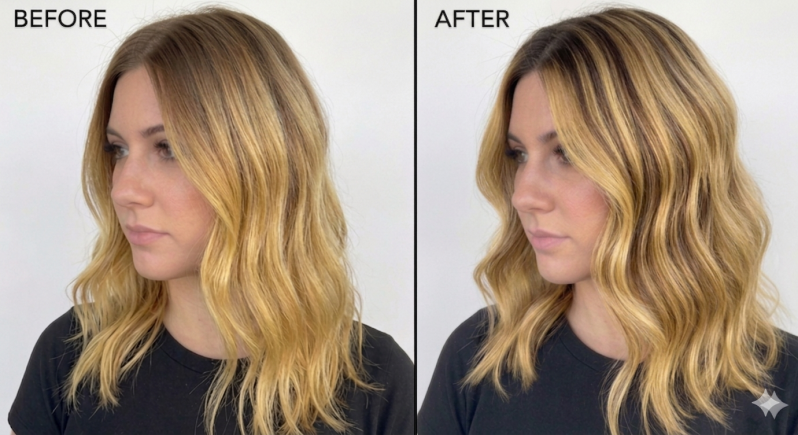
Nothing says dimension quite like strategic contrast. A classic base color can be completely transformed by adding highlights that are several shades lighter.
This look features a rich, deep auburn base. The dimension comes from the cool-toned copper highlights that frame the face and cascade through the waves. Notice how the lighter pieces reflect the ambient light, making the entire style look voluminous and dynamic.
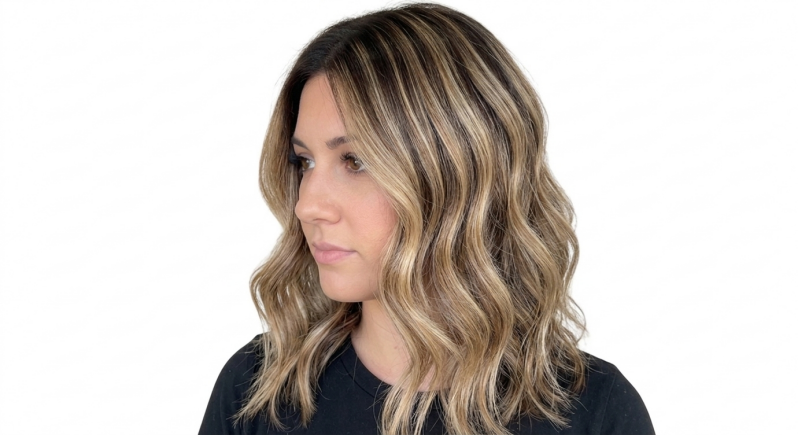
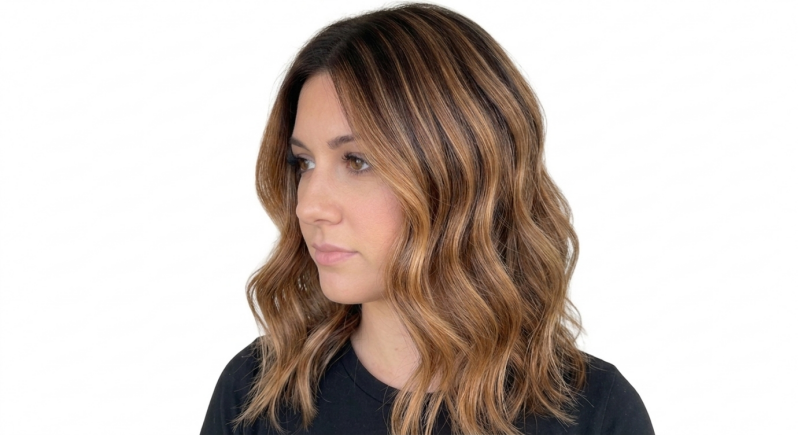
Blonde
Copper
Blonde
Creating Dimension: Lowlights
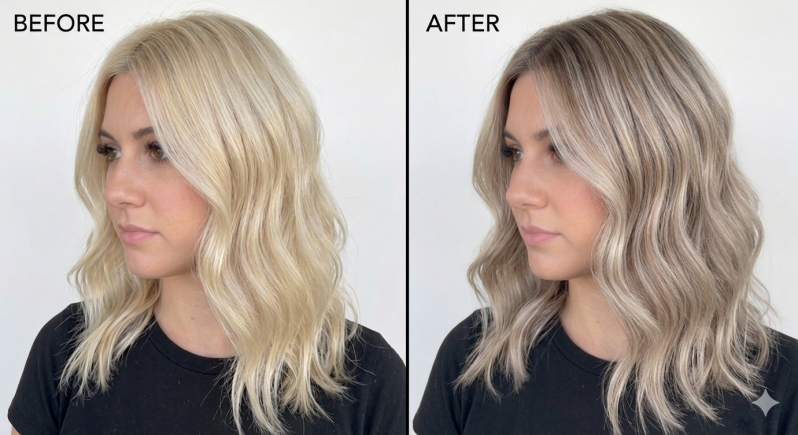
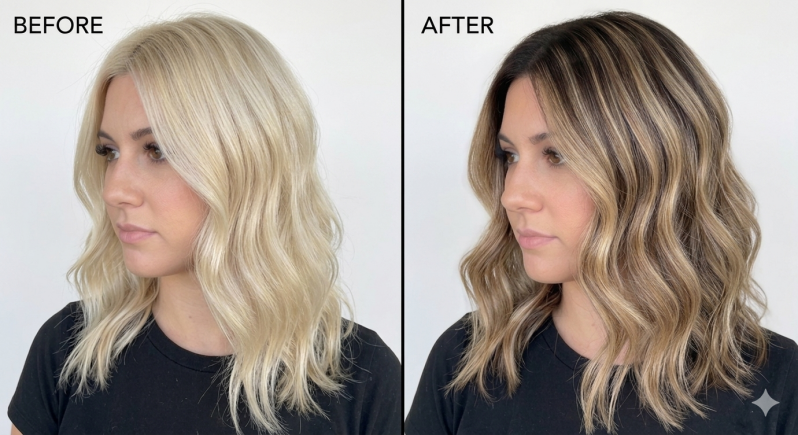
While highlights get all the glory for "brightening" things up, lowlights are the unsung heroes of hair color. If your hair is starting to look a bit "washed out" or one-dimensional after too many highlight appointments, low lights are exactly what you need to bring your look back to life.
Here is the lowdown on why these darker ribbons of color are a total game-changer.
What Exactly Are Lowlights?
Unlike highlights, which involve lifting the hair to a lighter shade, lowlights involve picking up specific strands and coloring them two to three shades darker than your base or current color.
Think of it like contouring for your face: highlights act as the "concealer" that brightens, while lowlights act as the "bronzer" that adds depth, shape, and contrast.
Why You’ll Love Them:
- Instant Depth: They prevent your hair from looking like a solid, flat block of color.
- Enhanced Texture: Darker tones tucked underneath lighter ones make waves and curls "pop."
- The "Natural" Fix: They can help blend away harsh "lines of demarcation" as your natural roots grow in.
- Hair Health: Lowlights usually involve a demi-permanent deposit-only dye, which is much gentler on your cuticles than bleach.
When Should You Get Them?
Most stylists recommend a "tonal reset" with lowlights during the fall and winter months to transition to a moodier, richer palette. However, they are also essential if you've gone too blonde and find that your skin tone is looking pale or dull against the hair.
Pro Tip: Ask your stylist for a "dimensional tint back" if you want to keep your blonde bright but need more "ribbons" of brown or caramel to make the color look expensive and high-end.
The Maintenance
The best part? Lowlights are incredibly low-maintenance. Because they are darker and often mimic your natural shade, you won't see a "skunk stripe" at the root as they grow out. A simple gloss or toner every 6–8 weeks is usually all you need to keep those darker tones rich and shiny.
Ready to add some mood to your mane? Lowlights might be the missing piece to your perfect hair color puzzle.
Are you looking to add lowlights to a blonde base, or are you hoping to richen up a brunette style?
The Silver Secret: How Lowlights Transform Grey and Salt-and-Pepper Hair
For many, the transition to natural silver is a liberating journey. However, there often comes a point where the "salt" starts to overpower the "pepper," leaving the hair looking a bit translucent, flat, or even washed out.
If you’ve embraced your grey but feel like your features are losing their "pop," the solution isn't going back to full coverage—it’s lowlights.
Why Grey Hair Needs Dimension
Natural grey hair often lacks the natural shadows that pigmented hair provides. Without those darker tones, the hair can look like a solid cloud of white or silver. By strategically reintroducing "pepper" back into the mix, you create a framework that makes the silver look intentional and high-end rather than just "grown out."
The Benefits of Lowlighting Silver Hair:
- Restores Depth: It adds a "backbone" to the hair color, making it look thicker and more voluminous.
- Frames the Face: Darker ribbons near the hairline can help define your eyes and jawline, which sometimes get "lost" against very light hair.
- Camouflages Yellowing: Cool-toned lowlights (like slate or charcoal) can neutralize unwanted brassy or yellow tones that grey hair often absorbs from the environment.
- Zero-Stress Maintenance: Unlike highlights, there is no bleach involved. We are simply putting color back into the hair.
The Technique: Lowlighting the "Salt"
The goal isn't to hide the grey; it’s to accent it. Stylists typically use a demi-permanent color that is two to three shades darker than your original natural base.
- For "Salt-heavy" hair: We add fine, woven ribbons of ash brown or deep slate to mimic the look of natural salt-and-pepper.
- For "Splotchy" grey: If your grey is concentrated in the front but dark in the back, lowlights can be used to balance the transition, making the silver look like a purposeful "money piece" or balayage.
Stylist Tip: Always opt for cool or neutral tones. Warm browns or reds can look muddy or "off" when placed next to crisp silver. Think charcoal, ash, and deep mushroom tones.
Keeping the Shine
Grey hair has a different texture—it’s often coarser and can lose its luster easily. Because lowlights are a deposit-only process, the hair often feels smoother and looks shinier after the service. To keep that silver-and-charcoal mosaic looking sharp, use a high-quality violet-based shampoo once a week to keep the "salt" bright and the "pepper" crisp.
Are you ready to give your silver a sophisticated upgrade? Adding a little bit of darkness might be the best way to let your light shine.
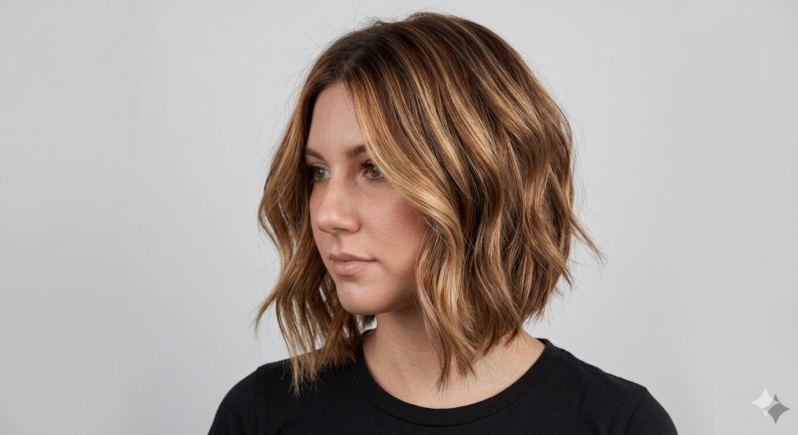
Cool, Crisp, and Defined: The Dimensional Bob
Dimensional color isn't just for long, flowing waves; it is also essential for giving structure to shorter, precise cuts. A sharp bob or lob can look dense and heavy if colored with a single dark shade.
Here, the classic chic bob is elevated by sophisticated dimension. A cool-toned, dark ash-brown base is accented by subtle yet noticeable highlights of a caramel blonde. This precise application doesn't disrupt the clean lines of the haircut but adds significant depth. It makes the texture pop and prevents the dark color from looking flat against the skin.